How to Increase Home Value with Renovations in Florida Without Wasting Money in 2026
Quick answer:
The best way to increase home value with renovations in Florida is to start with projects that improve insurance eligibility, storm readiness, curb appeal, and buyer confidence. In 2026, that usually means fixing deferred maintenance first, then prioritizing garage doors, entry doors, minor kitchen updates, bath refreshes, windows, roofing, outdoor living, and practical energy upgrades. Full luxury remodels often look impressive, but they usually lose to targeted, resale-focused improvements.
Florida is different from many states.
Heat, humidity, hurricanes, insurance pressure, and flood rules change what buyers value. A gorgeous remodel means less if the roof scares insurers, the windows are weak, or the permit history looks messy. That is where most competitor posts miss the plot.
Who this guide helps
This guide is for you if:
- You plan to sell in the next 6 to 24 months
- You own in Boca Raton, Palm Beach County, Miami-Dade, Tampa, Orlando, Jacksonville, or another Florida metro
- You want resale value, not just pretty finishes
- You are deciding between kitchen, bath, roof, windows, lanai, or pool
- You want to avoid over-improving for your neighborhood
- You need a Florida-specific view on insurance, taxes, permits, and flood rules
Why is the first dollar best spent on maintenance, not marble?
Fix the things that can kill financing, insurance, inspections, or buyer trust before you chase beauty.
This is the least advice in the article. It is also the most profitable.
Florida buyers care about the obvious stuff. They also care about the expensive hidden stuff. If a house has a tired roof, plumbing leaks, broken fixtures, old HVAC, or signs of neglect, buyers often assume there are more problems behind the walls. That hurts offers. In Florida threads and seller advice, the same theme keeps showing up: maintenance and paint often beat flashy overhauls when you are thinking about resale.
I would rank the first layer like this:
- Roof, leaks, drainage, and structural issues
- HVAC, electrical, plumbing, and water intrusion
- Windows, doors, and insurance-sensitive items
- Paint, lighting, flooring, and visible cosmetic wear
- Kitchens, bathrooms, and outdoor upgrades
That order is boring. It also saves people from dumb decisions.
A buyer may love quartz counters. They will still discount the house if the roof is near end-of-life or if the insurer will ask hard questions. Florida real estate professionals repeatedly say roofs and windows are among the first buyer questions because they affect both peace of mind and insurability.
Which renovations give the best ROI in Florida right now?
The strongest current benchmark still favors exterior and practical projects over oversized interior splurges.
The latest live Cost vs. Value benchmark shows that the best-paying projects are led by garage door replacement, steel entry door replacement, manufactured stone veneer, fiber-cement siding, and minor kitchen remodels. A backup power generator also ranks unusually well, which matters more in Florida than many competitors admit.
High-value renovation benchmarks Florida owners should care about
| Project | Current benchmark ROI | Why it matters in Florida |
| Garage door replacement | 268% | Curb appeal, storm confidence, security |
| Steel entry door | 216% | First impression, security, heat control |
| Manufactured stone veneer | 208% | Exterior upgrade with visible impact |
| Fiber-cement siding | 114% | Exterior durability and refreshed look |
| Minor kitchen remodel | 113% | Better than major kitchen gut jobs |
| Backup power generator | 95% | Storm readiness and resilience |
| Wood deck | 95% | Outdoor living appeal |
| Composite deck | 89% | Lower maintenance outdoor value |
| Midrange bath remodel | 80% | Useful refresh, not luxury excess |
| Vinyl windows | 76% | Efficiency and comfort |
| Asphalt roof replacement | 68% | Saleability and insurance confidence |
| Major kitchen remodel | 51% | Often too expensive for resale math |
Benchmark source note: these are national figures from the current 2025 Cost vs. Value report that remains the active benchmark in 2026. (Journal of Light Construction)
Here is the blunt takeaway.
Minor beats major more often than owners want to hear.
A light kitchen refresh can outperform a full designer tear-out. A functional bath update can beat a spa palace. A strong garage door can quietly outrank work that costs ten times more. That is not intuitive. It is still true.
Why do Boca Raton and Palm Beach County buyers care so much about storm-ready upgrades?
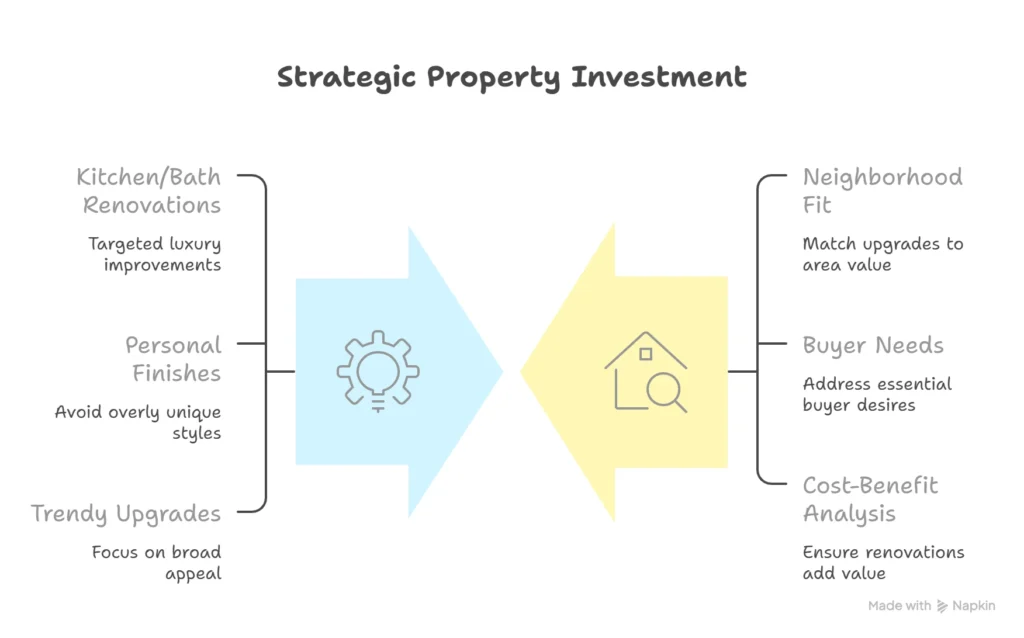
Because in Florida, storm-ready upgrades do two jobs at once. They protect the house and improve buyer confidence.
The My Safe Florida Home program offers free wind-mitigation inspections and grants of up to $10,000 for approved upgrades. The program says those improvements can strengthen homes and may also help lower insurance costs. That turns “storm upgrades” into something more powerful than regular cosmetic ROI. They can affect affordability after closing.
That matters even more in 2026 because buyers in several major Florida metros have more leverage. Realtor.com’s April 2026 buyer-market guidance names Jacksonville, Miami, Orlando, and Tampa among metros that have tipped into buyer-market territory, where inventory is higher and sellers need sharper positioning. Florida Realtors also reported more pending inventory in March 2026. In a market like that, “nice kitchen” helps, but “new roof, better windows, cleaner inspection, easier insurance” often helps more.
Composite Florida example
A Boca Raton owner with a $45,000 budget has two paths.
Path A is a high-style kitchen makeover with custom cabinets and premium stone.
Path B is a new garage door, front door, selective kitchen refresh, fresh interior paint, lighting, and inspection-driven repairs.
For resale, I would usually pick Path B first.
It touches curb appeal, confidence, and move-in readiness all at once. It also aligns better with the current benchmark data.
Should you refresh your kitchen or gut it in Florida?
A smart refresh usually wins unless your kitchen is functionally broken or badly below neighborhood standards.
This is where homeowners burn money.
The current benchmark gives a minor midrange kitchen remodel a far stronger return than a major kitchen remodel. Florida Realtors’ 2026 home-project piece also leans toward targeted updates like repainting cabinets, switching hardware, adding a backsplash, and improving storage instead of defaulting to demolition.
So what pays?
- Cabinet paint or refacing
- New pulls and soft-close hardware
- Quartz or durable counters if current surfaces date the room
- Better lighting
- Updated appliances if yours look old or mismatched
- A better pantry setup
- A usable island, if the layout supports it
What often does not pay well?
- Luxury appliance packages that overshoot the neighborhood
- Moving plumbing for style only
- Trend-heavy finishes that will age fast
- A gut remodel when the cabinets are still serviceable
The contrarian point is simple. Buyers buy kitchens with their eyes first. They buy value with their brain second. If your kitchen looks clean, bright, functional, and current, you may not need to rebuild it from scratch.
What makes bathrooms pay off in South Florida and Tampa Bay?
Bathrooms add value when they feel clean, bright, and easy to use, not when they try too hard.
Midrange bath remodels still outperform upscale bath work in the current benchmark data. Competitors also keep circling back to the same features because buyers respond to them: walk-in showers, modern vanities, improved lighting, water-efficient fixtures, storage, and better ventilation. Florida Realtors’ 2026 trend piece adds a strong “wellness” angle, but even there, the smartest changes are still practical first.
Florida-specific advice matters here.
Humidity is brutal on poor ventilation. Cheap fixtures age fast. Slippery surfaces can hurt both safety and resale. If you are renovating a bath in Palm Beach County, Boca Raton, Fort Lauderdale, or Tampa, I would care more about ventilation, lighting, slip resistance, and layout than I would about boutique finishes.
What I would prioritize
- Frameless or semi-frameless shower
- Better exhaust fan and moisture control
- Simple vanity with storage
- Large mirror and brighter lighting
- Neutral tile
- One accessibility-friendly shower if the home fits that buyer profile
That last point matters more in 2026 than many writers admit. HomeLight highlights aging-in-place demand, and ORC’s Florida piece smartly connects bathrooms to accessibility and long-term usability. (HomeLight)
Are outdoor living spaces worth it in Palm Beach County, Naples, and Central Florida?
Usually yes, but only when the space feels usable, shaded, and easy to maintain.
Florida is built for outdoor living. That does not mean every backyard project is smart.
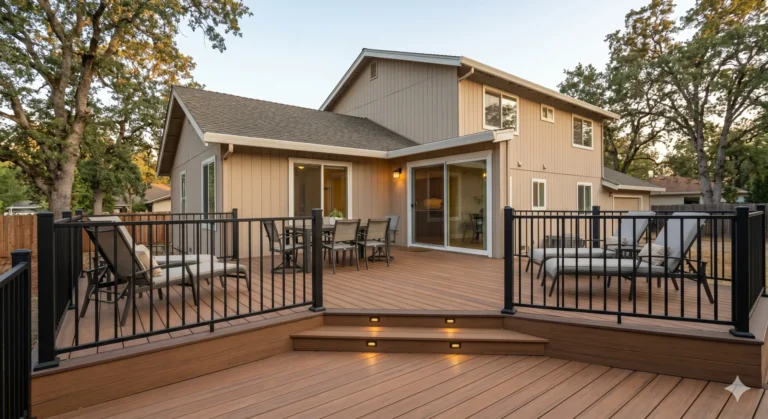
Outdoor value grows when the space extends daily life. Screened lanais, covered patios, paver areas, dining zones, and simple outdoor kitchens often outperform overbuilt backyard fantasy projects because they serve a wider buyer pool. Competitor pages in Florida keep ranking outdoor living highly for the same reason. HomeLight also notes that decks and patios still recoup a strong share of cost. (aciesflorida.com)
If you own in Boca Raton, Palm Beach County, Naples, Sarasota, or Orlando, think in this order:
- Shade
- Bugs
- Drainage
- Easy cleaning
- Entertaining flow
That is why a screened lanai can beat a flashy hardscape project. It solves real Florida annoyances.
A lot of competitor posts say “outdoor kitchen” and stop there. That is lazy. In real life, the better question is this: Will a buyer actually use this in July? If the answer is no, the upgrade is weaker than it looks.
Do impact windows, doors, roofs, and generators really add value in Florida?
Yes, but not always in a clean dollar-for-dollar way. Their power is often resale speed, insurance savings, and buyer trust.
This is the section most Florida articles should have led with.
Impact windows and stronger openings can improve storm protection, lower heat gain, and sometimes reduce insurance costs. The state’s My Safe Florida Home program exists because wind mitigation matters enough to be publicly funded. Community discussion from Florida real estate threads also shows buyers ask about roofs and impact windows early, even when those projects do not return full cost on paper.
The cleanest way to think about these upgrades is this:
- Garage door and entry door: strong benchmark ROI and instant curb value
- Impact windows and doors: sale ability, insurance appeal, comfort, noise control, and safety, even if strict resale recovery varies by neighborhood.
- Roof replacement: often necessary for insurance, financing, and buyer confidence, even when ROI is moderate.
- Backup generator: stronger-than-most people expect on benchmark ROI, and especially relevant in storm-prone Florida.
Composite Florida example
A Tampa seller spends on a generator, selective electrical work, a garage door, and paint. Another seller spends the same budget on imported tile and luxury fixtures.
Which home gets more serious interest faster?
In many Florida neighborhoods, the practical house wins.
Not because buyers hate beauty. Because buyers hate future problems.
Suggested internal link: [New roof vs impact windows in Florida]
Does a pool add value in Florida or just eat your budget?
A pool can add value in Florida, but it is one of the most neighborhood-sensitive projects you can make.
This is where bad advice spreads fast.
HomeLight says a pool can raise value in some warm-climate areas. Realtor.com’s 2025 pool data also shows a large listing premium for homes with pools, and Florida remains one of the pool-heavy states. But that does not mean every new pool is a smart resale investment. Even Reddit discussions from Florida brokers and agents say pool value varies sharply by market, price point, and buyer type.
Here is the truth most sellers need:
- In luxury or pool-normal neighborhoods, a pool may be expected
- In family-heavy neighborhoods, some buyers see a liability
- Maintenance, insurance, enclosures, and safety features affect the math
- A new pool often does not return full installation cost
So when does a pool make sense?
It makes sense when comps support it, buyers expect it, and your hold period is long enough that you also enjoy it yourself.
If your only goal is resale, a lanai, patio, outdoor dining area, or better landscaping is often the safer bet.
What renovations can hurt value or waste money?
Over-customizing, over-improving, and ignoring your comps are the three classic ways Florida owners lose money.
Here is what I would watch closely:
- Full luxury kitchen or bath gut jobs in a midrange neighborhood
- Ultra-personal finishes
- Cheap work that photographs badly
- Pool installs without comp support
- Major structural layout changes that buyers did not ask for
- Trendy upgrades that do nothing for insurance, usability, or first impression
CrossView Realty says it plainly. You usually do not need to fully remodel kitchens or gut bathrooms before selling. Their advice lines up with the benchmark data. Major renovations rarely return full value unless they are truly strategic.
Community advice says the same thing in blunter language. Buyers do not care much about your shiny countertop if the house still signals neglect.
That is the hidden rule here.
Eliminate hassle before you add luxury.
How do permits, flood rules, and Florida property taxes change the renovation math?
In Florida, permitting and compliance are not side issues. They can completely change project cost and feasibility.
This is the biggest missed topic across competitor content.
First, the flood issue.
FEMA’s substantial improvement rule can force much bigger compliance work if improvements or repairs exceed 50% of the building’s market value in regulated floodplain situations. In plain English, a “simple renovation” can stop being simple very fast on certain coastal properties.
Second, the tax issue.
Florida’s homestead system limits annual assessed-value increases, but the statute also says changes, additions, or improvements are assessed at just value after completion. Local property appraiser guidance explains it even more clearly: new improvements get added at full market value first, then fall under the cap in later years.
Third, the saleability issue.
Unpermitted work can scare buyers, appraisers, insurers, and lenders. I would rather have a smaller, clean, documented renovation than a bigger “custom job” with paperwork problems.
Florida rule of thumb
Before any large project, check:
- Flood zone status
- Permit requirements
- HOA restrictions
- Insurance implications
- County or city inspection sequence
- How the project may affect assessed value later
This matters a lot in coastal Palm Beach County, Broward, Miami-Dade, Sarasota, and flood-prone areas statewide.
How should you choose renovations based on your timeline?
Your hold period should decide your renovation plan.
If you are selling in 3 to 6 months
Focus on:
- Repairs
- Paint
- Lighting
- Hardware
- Flooring touch-ups
- Landscaping
- Pressure washing
- Entry and garage door appeal
If you are selling in 6 to 24 months
Focus on:
- Minor kitchen refresh
- Midrange bath refresh
- Window or door strategy
- Roof or HVAC if old
- Outdoor living polish
- Market-specific upgrades supported by comps
If you are staying 5 years or more
You can justify:
- Impact openings
- Better HVAC
- Generator
- Smart home systems
- Accessibility upgrades
- Bigger outdoor improvements
- Selective layout work
This is where many homeowners think backwards. They renovate as if every project needs full resale payoff. That is not always true. A long-term owner in Boca Raton or Naples may accept slower resale ROI because insurance savings, comfort, and storm protection matter every year they live there.
A smarter Florida renovation roadmap for 2026
If I had to compress this whole article into one practical roadmap, it would be this:
Phase 1
Fix defects, leaks, roof issues, HVAC, electrical, and obvious maintenance.
Phase 2
Improve curb appeal with a garage door, entry door, paint, lighting, pressure washing, and landscape cleanup.
Phase 3
Refresh kitchen and baths without overbuilding.
Phase 4
Choose one Florida-specific value lever:
- impact-rated openings
- generator
- screened lanai
- better insulation or cooling efficiency
- accessibility-friendly bath
Phase 5
Check the comps before every big spend.
That last line is the adult advice.
Your renovation does not compete with Pinterest. It competes with the homes a buyer can see this weekend.
FAQ section for featured snippets and long-tail search
1) What renovation adds the most value to a house in Florida?
For most Florida homes, the best-value renovations are practical exterior and confidence-building projects first. Current benchmark data favors garage doors, entry doors, minor kitchen updates, and some siding work. In Florida specifically, roofs, windows, and wind-mitigation improvements can also matter because they affect insurance and buyer trust.
2) Do impact windows increase home value in Florida?
Usually yes, but the value is not only in appraisal. Impact windows can improve storm protection, reduce heat gain, and support insurance savings. In many Florida markets, they help homes feel safer and easier to own.
3) Is a kitchen remodel worth it before selling in Florida?
A minor kitchen remodel usually is. A major luxury remodel often is not. Refreshes tend to beat gut jobs on resale math unless the kitchen is badly outdated for the neighborhood.
4) Does a new roof increase home value in Florida?
Yes, especially because it can improve saleability and insurance acceptance. It may not return every dollar spent, but it often widens your buyer pool.
5) Does a pool add value to a home in Florida?
Sometimes. It depends heavily on neighborhood norms, price point, and buyer type. In pool-normal areas it can help, but new pools often do not repay full build cost.
6) What should I fix first before selling my house in Florida?
Start with anything that could hurt inspections, financing, or insurance. Roof problems, plumbing leaks, electrical hazards, HVAC issues, and visible deferred maintenance come first.
7) Are outdoor kitchens worth it in Florida?
They can be, especially in higher-end or entertainment-focused markets. But a shaded, screened, functional outdoor area often beats an expensive build that feels too niche.
8) Do Florida renovations affect property taxes?
They can. Homestead caps still exist, but new improvements are generally added at just value after completion. Then the cap applies in later years.
9) What is the FEMA 50% rule in Florida renovations?
In flood-regulated situations, if the cost of improvements or repairs reaches 50% of the building’s market value, the property may need to be brought into compliance with current flood rules. That can dramatically change your budget.
10) Is 2026 a good time to renovate before selling in Florida?
Yes, but only with discipline. Florida inventory has loosened in key metros, so condition matters more than it did in frenzy years. Smart, targeted updates make more sense than emotional overspending.
11) Do buyers in Boca Raton or Palm Beach County care about smart home features?
They can, but smart features rarely beat fundamentals. Buyers usually notice lighting, climate control, security, and convenience. Still, they tend to value a clean roof and strong windows more than novelty tech.
12) What is the biggest mistake Florida homeowners make with renovations?
Over-improving without checking comps. The second biggest mistake is ignoring storm, insurance, and permit realities while chasing cosmetic wow factor.
Conclusion
If your goal is to increase home value with renovations in Florida, stop thinking like a showroom and start thinking like a buyer.
Buyers want a home that feels safe, insurable, easy to own, and current. That is why the winning formula in 2026 is usually maintenance first, curb appeal second, selective interior refresh third, and Florida-specific resilience upgrades where the comps support them. The prettiest renovation is not always the smartest one. The smartest one is the project stack that reduces buyer resistance and raises buyer confidence.