Is Quartz or Granite Better?
Quartz is better for most busy homeowners who want low maintenance, stain resistance, consistent design, and easy daily cleaning. Granite is better if you cook with high heat, want natural stone, love one-of-a-kind movement, or prefer a surface that can handle outdoor light better than standard resin-based quartz.
For 2026 remodels, I would choose quartz for family kitchens, rental properties, modern bathrooms, and low-maintenance homes. I would choose granite for serious cooks, rustic homes, outdoor kitchens, and homeowners who value natural variation.
The real answer is not “quartz always wins” or “granite is timeless.” The better countertop is the one that matches your cooking habits, climate, contractor quality, and resale goals. NKBA’s 2026 kitchen trend reporting shows quartz remains the leading countertop material, while granite demand has softened compared with quartz and quartzite. (NKBA)

Key Takeaways for Homeowners
Quartz vs Granite Countertops comes down to five things: maintenance, heat, stains, budget, and installer skill.
Quartz needs no sealing, resists stains well, and gives a clean, predictable look. Granite handles heat better, brings natural character, and may cost less or more depending on the slab. Quartz often costs about $50 to $200 per square foot installed, while granite often lands around $80 to $150 per square foot installed, with local labor and slab rarity changing the final price. (HomeGuide)
Who Should Read This Guide?
This guide is best for:
- Homeowners comparing countertop bids
- Kitchen remodel clients before hiring a contractor
- Real estate investors upgrading kitchens
- Bathroom remodel buyers
- Homeowners in humid, hot, coastal, or freeze-thaw regions
- Anyone worried about stains, heat damage, seams, or bad installers
What Is the Real Difference Between Quartz and Granite?
Quartz is engineered stone made from quartz minerals, resin, pigments, and binders. Granite is natural stone cut from quarried slabs. That one difference explains most of the performance gap.
Quartz is more controlled. You can pick a slab that looks almost identical to the showroom sample. Granite is less predictable. That is its charm and its danger.
I have seen homeowners fall in love with a granite sample, then panic when the full slab had a bold vein running through the island. I have also seen quartz buyers surprised when a hot pan left a dull mark near the cooktop.
Here is the contractor truth: both materials fail when the wrong installer touches them.
Quartz vs Granite Countertops Cost in 2026: Which Saves Money?
Granite can be cheaper at entry level, while quartz can be more predictable in total cost. Exotic granite, premium quartz, waterfall edges, cutouts, and complicated seams change everything.
| Cost factor | Quartz | Granite |
| Typical installed range | $50 to $200 per sq. ft. | $80 to $150 per sq. ft. |
| Sealing cost | Usually none | Periodic sealing |
| Template risk | Medium | Medium |
| Slab variation risk | Low | High |
| Best budget use | Clean rental upgrades | Local stone deals |
Homeowners often compare slab price only. That is a mistake. Ask for the installed price, including template, edge, sink cutout, removal, backsplash, seams, supports, and haul-away.
Which Countertop Handles Heat Better?
Granite handles heat better than quartz. Quartz contains resin, and resin can discolor or scorch under high heat. Granite is natural stone, but sudden thermal shock can still damage it.
This is where I disagree with many glossy design blogs. If you cook every night with cast iron, pressure cookers, sheet pans, and hot Dutch ovens, granite deserves a serious look.
Quartz is tough. It is not magic. Use trivets.
Which Countertop Resists Stains Better?
Quartz usually resists stains better because it is nonporous. Granite can resist stains well too, but only when sealed correctly and cleaned quickly.
Coffee, red wine, turmeric, cooking oil, and hair dye are the real tests. In a busy family kitchen, quartz is more forgiving.
Granite is not fragile. But lighter granite with poor sealing can darken around the sink or cooktop. That is not “patina.” That is preventable neglect.
Does Granite Need Sealing?
Yes, most granite countertops need sealing. Some dense slabs need it less often, but homeowners should still test the surface yearly.
Try the water test. Put a few drops of water on the counter. Wait 10 to 15 minutes. If the stone darkens, it likely needs sealing.
This is a small task. The bigger issue is honesty. A contractor who says “granite never needs sealing” is either rushing you or does not know stone.
Is Quartz Safer Than Granite?
Installed quartz and granite are generally safe for homeowners. The larger 2026 safety issue is worker exposure to respirable crystalline silica during cutting, grinding, and fabrication.
NIOSH warns that countertop fabricators working with engineered stone face silicosis risks because engineered stone can contain high crystalline silica content. OSHA and NIOSH have also published countertop silica guidance for controlling worker exposure. (CDC)
This matters when hiring. Ask your fabricator:
- Do you use wet cutting?
- Do you control dust at the source?
- Do workers wear proper respiratory protection?
- Is cutting done in a compliant shop, not in my driveway?
That question may feel awkward. Ask anyway.
What About Granite and Radon?
Granite can emit small amounts of radiation or radon, but the EPA says it is extremely unlikely that granite countertops raise annual radiation exposure above normal background levels. The EPA says the main home radon source is usually soil under and around the house. (US EPA)
In plain English: test your basement or crawlspace before blaming your island.
Which Looks Better in Modern Kitchens?
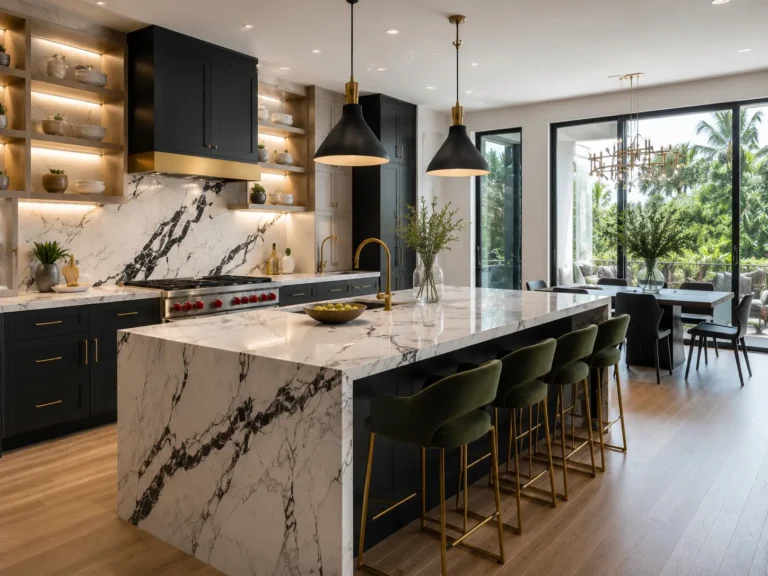
Quartz looks better when you want consistency, calm patterns, marble-look veining, or a minimalist 2026 kitchen. Granite looks better when you want natural depth, movement, and a less manufactured feel.
Quartz wins in modern white oak kitchens, slab backsplashes, waterfall islands, and soft neutral palettes. Granite wins in mountain homes, traditional kitchens, warm wood spaces, and kitchens where natural variation feels intentional.
NKBA’s 2026 trend reporting points toward quartz, quartzite, organic neutrals, wood tones, and solid-surface backsplashes. (NKBA)
Quartz vs Granite Countertops for Local Homes: What Changes by Region?
Climate changes the decision. Heat, UV exposure, humidity, and local labor quality affect countertop performance.
| Region | Better fit | Why |
| Hot Southwest | Granite or UV-stable alternatives | Standard quartz can yellow outdoors |
| Coastal homes | Quartz indoors | Easy cleaning, stain resistance |
| Cold climates | Either | Focus on cabinet support and seams |
| Luxury urban remodels | Quartz or quartzite | Modern resale appeal |
| Rural homes | Granite | Natural look, strong local availability |
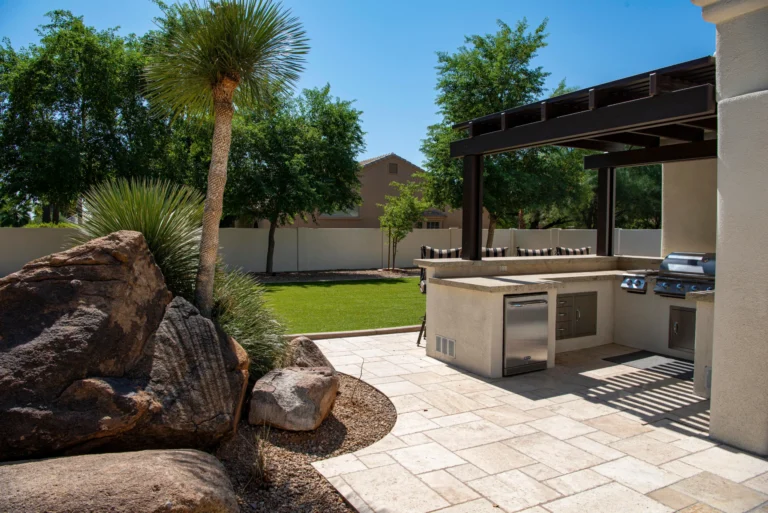
Standard resin-based quartz is not ideal for outdoor kitchens because UV exposure can discolor it. Porcelain or sintered stone is often better outdoors. (BELLASTONE)
Signs You Hired the Wrong Contractor
The wrong countertop contractor can ruin either material. Bad seams, weak support, poor templating, and sloppy sink cutouts cause more regret than the quartz-or-granite choice itself.
Watch for these red flags:
- They do not inspect cabinet level before template
- They avoid talking about seams
- They cannot explain overhang support
- They cut dry without dust control
- They push one material for every homeowner
- They will not show slab layout before fabrication
- They give a vague one-line estimate
Here is what nobody tells you: the best slab in the yard can look cheap after a lazy seam layout.
What Measurements Should Homeowners Know?
Most countertop mistakes happen around overhangs, seams, sink rails, appliance clearances, and cabinet support. Ask about these before signing.
Contractor-style checklist:
- Confirm slab thickness, usually 2 cm or 3 cm
- Ask where seams will land
- Verify sink cabinet support
- Check dishwasher clearance
- Confirm range and refrigerator gaps
- Ask about brackets for large overhangs
- Review edge profile before fabrication
For kitchen planning, NKBA guidelines are often used by designers and remodelers as a reference point for clearances and layout planning. Use them during the design phase, not after the slab is cut.
Best Brands and Tools to Ask About
Brand matters less than fabrication quality, but reputable materials and tools reduce risk.
Brands homeowners often compare:
- Cambria
- Caesarstone
- Silestone
- MSI Q Quartz
- HanStone
- Cosentino Dekton
- Neolith
- Daltile ONE Quartz
- Tenax sealers
- Stain-Proof by Dry-Treat
My honest take: I would rather buy a mid-range slab from a careful fabricator than a premium slab from a careless shop.
Which Is Better for Resale?
Quartz usually has broader 2026 resale appeal because buyers like low maintenance and consistent design. Granite can still help resale when the color, pattern, and finish match the home.
Avoid overly busy granite if you plan to sell soon. Avoid ultra-trendy quartz if you plan to keep the home for 15 years.
The safest resale choice is boring in the best way: warm white, soft gray, beige, cream, or subtle stone-look movement.
Common Contractor Case Studies
Case study 1: The hot pan mark
A homeowner placed a cast iron pan on quartz near the range. The surface dulled. The fix was not simple. A $20 trivet would have saved the counter.
Case study 2: The granite sink stain
A light granite island looked perfect for six months. Then oil darkened the sink rail. The fabricator had skipped sealing. Resealing helped, but the lesson stuck.
Case study 3: The seam argument
A client approved material but not layout. The seam landed across the main island view. Nothing was technically wrong, but everyone hated it.
FAQs About Quartz and Granite
Is quartz better than granite for kitchens?
Quartz is better for low maintenance, stain resistance, and consistent design. Granite is better for heat resistance, natural character, and some outdoor or traditional kitchens.
Is granite cheaper than quartz?
Sometimes. Entry-level granite can be cheaper, but rare granite can cost more than many quartz options. Compare installed bids, not slab prices.
Can I put hot pans on granite?
Granite handles heat better than quartz, but trivets are still smart. Sudden temperature changes can damage stone or sealers.
Does quartz stain?
Quartz resists stains well, but it is not stain-proof. Clean coffee, wine, turmeric, oils, and dyes quickly.
Is quartz bad because of silica?
The main concern is fabrication dust, not normal homeowner use after installation. Hire shops that follow OSHA and NIOSH silica controls. (CDC)
Which countertop is best for a rental property?
Quartz is usually better because tenants may not seal granite or clean spills quickly.
Which countertop is best for an outdoor kitchen?
Granite, porcelain, or sintered stone usually beats standard quartz outdoors because UV exposure can discolor resin-based quartz. (BELLASTONE)
2026 Material Watch
Keep an eye on low-silica engineered surfaces, porcelain slabs, sintered stone, recycled glass surfaces, smart glass accents, heat pump integration around kitchen planning, and recycled steel framing in remodels. These materials and systems are becoming part of the bigger 2026 conversation around safer fabrication, electrification, durability, and lower-waste renovation.
Final Verdict: Which Should You Choose?
Choose quartz if you want a clean look, fewer maintenance chores, strong stain resistance, and broad 2026 resale appeal.
Choose granite if you cook hard, love natural stone, want heat tolerance, or prefer a surface that does not look manufactured.
My strong opinion: most homeowners do not regret choosing quartz. They regret hiring the wrong fabricator. The material matters. The installer matters more.