Small Kitchen Hacks: Turning a Galley Kitchen Into an Airy, Functional Culinary Space
The best small kitchen hacks for a galley layout combine light colors, vertical storage, a cleaner work triangle, and one or two bigger moves — like removing upper cabinets or opening the kitchen to an adjoining room. Most of these changes take a weekend or a targeted budget, not a full renovation. A few, like moving a wall, cross into remodel territory and require a City of Boca Raton building permit before work starts.
This guide walks through the no-construction fixes first, then the storage and layout principles that make a narrow kitchen genuinely easier to cook in, and finally the local permit and climate factors that matter if you live in Boca Raton or elsewhere in Palm Beach County.
Key Takeaways
- Light, reflective surfaces and a simplified color palette open up a galley kitchen more than any single appliance swap.
- Removing or opening up upper cabinets on one wall — even without a full remodel — changes how the room feels almost immediately.
- The kitchen “work triangle” (sink, stove, refrigerator) still matters for function, even in a narrow footprint.
- Vertical storage, pull-out organizers, and slim or built-in appliances reclaim floor space without adding square footage.
- Removing a wall, relocating plumbing or gas lines, or extending a kitchen into another room requires a building permit through Boca eHub, the City of Boca Raton’s online permitting system.
- Florida’s humidity makes ventilation and moisture-resistant materials worth prioritizing in any kitchen update, cosmetic or structural.
What Makes a Galley Kitchen Feel Small in the First Place?
A galley kitchen is built around two parallel runs of cabinets and countertop facing each other, usually connecting two rooms. The layout is efficient — everything is within reach — but a few things make it feel tighter than it needs to be.
Upper cabinets on both walls create a narrow, enclosed sightline down the middle of the room. Dim or single-source lighting leaves shadows on countertops. Bulky, dark, or mismatched appliances interrupt the flow of the space, and cluttered counters shrink the usable workspace even further.
None of these problems require demolition to fix. The next section covers the changes that make the biggest visual difference without construction.
What Are the Best Small Kitchen Hacks You Can Do Without Construction?
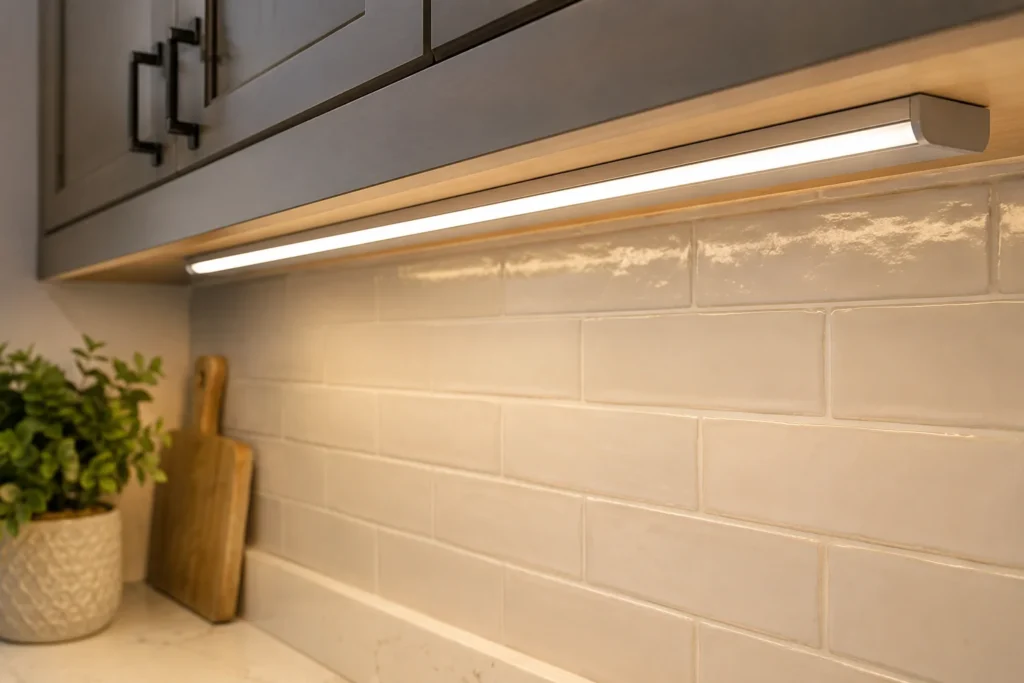
These changes have the most impact for the least disruption. Most homeowners can do several of them in a weekend.
Lighten the palette and add reflective surfaces
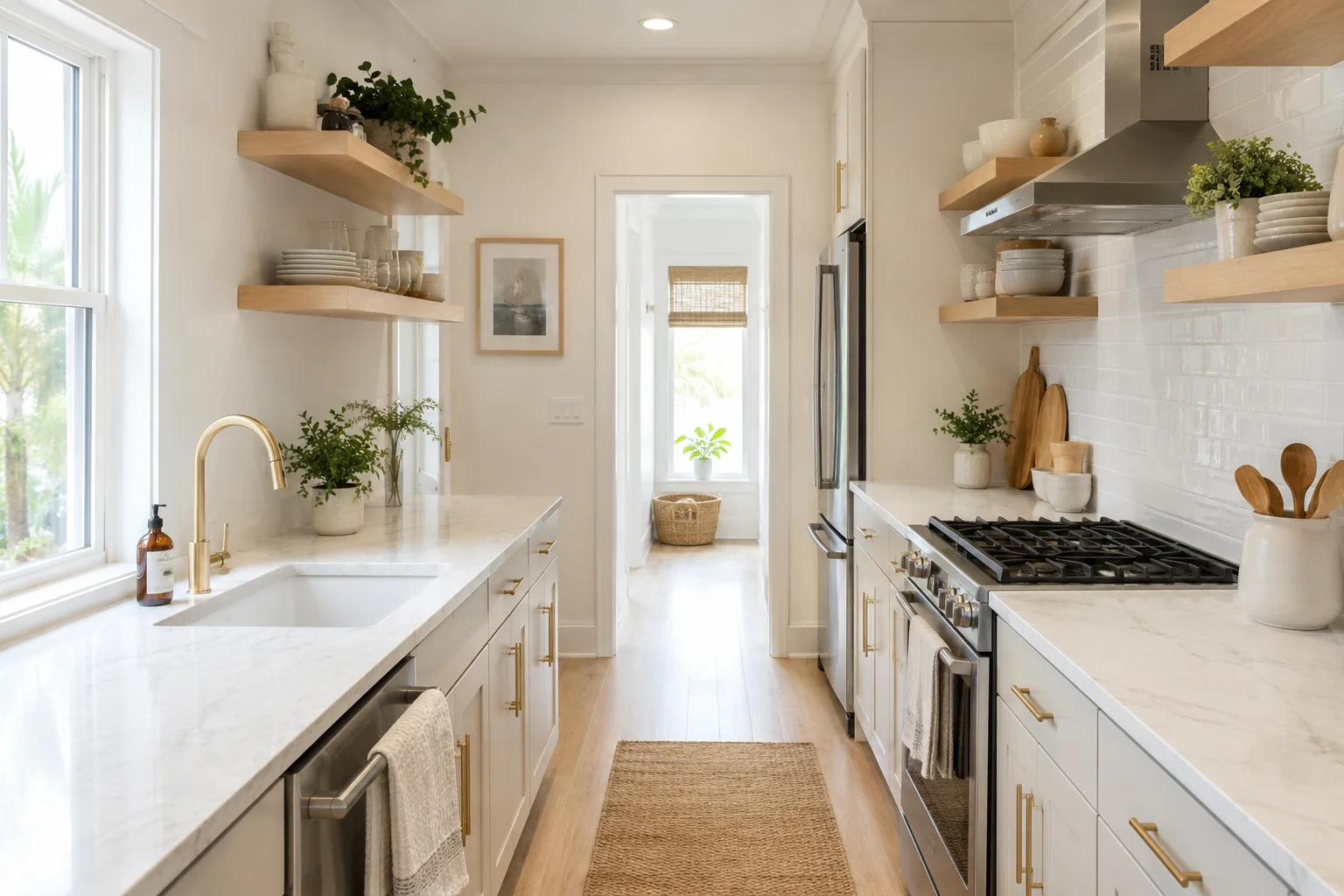
White, cream, and soft, warm tones on walls and cabinets bounce light around the room and visually push the walls back. Glossy cabinet finishes, a mirrored or glass-tile backsplash, and light countertops all add to the effect.
Open up one wall of upper cabinets
Removing solid-fronted upper cabinets on one side of the galley — or swapping them for open shelving or glass-front doors — breaks up the tunnel effect that makes galley kitchens feel closed in. This is one of the most consistently recommended fixes among interior designers because it reduces visual weight without reducing floor space.
Layer your lighting
A single overhead fixture leaves countertops in shadow. Add under-cabinet task lighting for prep areas, then layer in ambient overhead lighting so the room reads as bright and open rather than dim and narrow.
Choose compact or integrated appliances
A worktop-depth refrigerator, a slimline dishwasher, or panel-front appliances that match your cabinetry reduce visual bulk. Appliances that blend into the cabinet run keep the eye moving down the length of the kitchen instead of stopping at a large, contrasting box.
Rethink the flooring direction
Light-colored flooring with fewer grout lines reads as more open. Laying tile or plank flooring parallel to the longest wall draws the eye down the room’s length, which can make a narrow galley feel longer and less boxed-in.
How Should You Organize Storage in a Small Galley Kitchen?
Once the visual fixes are in place, storage is what determines whether the kitchen actually functions well day to day.
- Go floor-to-ceiling: tall cabinets use vertical space that’s often wasted above standard-height uppers.
- Add pull-out shelves and drawers: deep drawers for pots and pans are easier to access than low, blind cabinets.
- Use corner solutions: lazy Susans and pull-out corner units recover space that’s otherwise hard to reach.
- Hide the trash can: a pull-out trash and recycling insert in a base cabinet removes a visual interruption from the room.
- Add a pull-out cutting board or extendable counter section if permanent counter space is limited.
Does the Kitchen Work Triangle Still Matter in a Small Kitchen?
Yes, though modern kitchen designers increasingly pair it with task-zone planning for households with more than one cook. The classic work triangle connects the sink, cooktop, and refrigerator, and it’s still a useful check for a galley layout.
The National Kitchen and Bath Association (NKBA) publishes reference clearances that many designers and contractors use as a baseline, summarized below.
| Element | NKBA Reference Clearance |
|---|---|
| Walkway width | At least 36 inches |
| Work aisle (single cook) | At least 42 inches |
| Work aisle (multiple cooks) | At least 48 inches |
| Each work triangle leg | 4 to 9 feet |
| Total work triangle distance | No more than 26 feet |
| Landing area beside the primary sink | 24 inches on one side, 18 inches on the other |
Reference figures from NKBA Kitchen Planning Guidelines; treat as design references, not code. Confirm final dimensions with your contractor or designer against your specific floor plan.
In a true galley kitchen, the biggest risk is a walkway that’s too narrow once appliance doors are factored in — a 36-inch aisle can shrink to well under 30 inches with a dishwasher or oven door open. Measuring appliance swing space before finalizing a layout avoids that surprise.
When Does a Small Kitchen Hack Become a Full Remodel?
Cosmetic changes — paint, lighting, hardware, open shelving, appliance swaps within the same footprint — generally don’t require a permit. A handful of changes cross into remodel territory because they affect the structure, electrical, or plumbing systems of the home.
| Change | Typical Scope | Permit Likely in Boca Raton? |
|---|---|---|
| Paint, lighting, hardware, open shelving | Cosmetic, same footprint | No |
| Swapping appliances in existing locations | Cosmetic to minor electrical | Usually no, unless new circuits are added |
| Adding new outlets or circuits | Electrical | Yes |
| Removing a non-load-bearing wall or pass-through | Structural (minor) | Yes |
| Removing or altering a load-bearing wall | Structural (major, engineering required) | Yes, with signed and sealed drawings |
| Relocating a sink, gas line, or extending the kitchen into another room | Plumbing / structural | Yes |
Boca Raton and Palm Beach County Considerations
A few local factors are worth weighing before you start any kitchen project in this area.
Permits go through Boca eHub
The City of Boca Raton processes building permit applications, plan reviews, and inspection scheduling through its online system, Boca eHub, administered by the city’s Building Department at 200 NW 2nd Avenue. Structural changes, such as removing or altering a wall, require an application and, for load-bearing changes, signed and sealed drawings from a Florida-licensed engineer or architect. This applies whether the work is being done by a licensed contractor or, in limited owner-builder situations, by the homeowner.
If your home is under the Florida Building Code, 8th Edition, inspectors will check any structural, electrical, or plumbing work against that code during the permit process. Confirm current requirements and fees directly with the Boca Raton Building Department before starting work, since permit fee schedules and review procedures are updated periodically.
Condos and HOAs may add their own rules
If your galley kitchen is in a condo or an HOA community, check your association’s governing documents before assuming a city permit is the only approval you need. Many associations require board approval for renovations that affect shared walls, plumbing risers, or building systems, even when the city permit process alone wouldn’t require it.
Humidity and ventilation deserve extra attention
South Florida’s humidity makes proper kitchen ventilation more important than it might be in a drier climate. A range hood vented to the outside helps control moisture and cooking odors, which matters even more in a tighter, less airy galley layout. Moisture-resistant materials for cabinetry and backsplashes are also worth prioritizing near sinks and cooking surfaces.
Common Mistakes to Avoid
- Skipping the permit step on a wall removal because the wall “didn’t look load-bearing.” Only a licensed engineer or architect can confirm that, and getting it wrong can mean a stop-work order and rework.
- Choosing appliances by size alone and forgetting to check door swing against walkway width.
- Adding storage before decluttering — extra cabinets don’t help if they’re filled with items you no longer use.
- Assuming a condo or HOA renovation only needs a city permit, without checking association rules first.
- Prioritizing a look (like all-white, all-matching cabinetry) over the contrast and depth that actually make a small space read as larger.
Frequently Asked Questions
What is the cheapest way to make a galley kitchen feel bigger?
Paint and lighting are the lowest-cost, highest-impact changes. A lighter wall color combined with under-cabinet task lighting and decluttered counters can visibly open up the room without any construction.
Do I need a permit to remove upper kitchen cabinets in Boca Raton?
No, in most cases. Removing cabinets and replacing them with open shelving is a cosmetic change. A permit becomes relevant if the work involves removing a wall, relocating electrical or plumbing, or other structural changes.
How do I know if a wall in my galley kitchen is load-bearing?
You shouldn’t assume either way. A licensed contractor, engineer, or architect can evaluate the wall and the home’s framing. If it is load-bearing, Boca Raton will require signed and sealed engineering drawings as part of the permit application submitted through Boca eHub.
Can a galley kitchen still fit an island or peninsula?
It depends on the width of the room. NKBA reference guidelines call for at least 42 inches of clearance for a single cook and 48 inches for multiple cooks around an island, so a peninsula or narrow rolling cart is often a more realistic fit than a full island in a true galley footprint.
What’s the best flooring for a small kitchen in a humid climate like Boca Raton?
Moisture-resistant options like porcelain tile or luxury vinyl plank hold up well in South Florida’s humidity and are easy to keep clean. Lighter tones and larger format tiles also help the space read as more open.
How long does a galley kitchen remodel typically take?
Cosmetic updates can often be completed in days to a couple of weeks. Projects that involve permits — wall removal, new electrical circuits, or plumbing changes — take longer once plan review, inspections, and contractor scheduling are factored in. A licensed remodeler can give you a realistic timeline based on your specific scope.
Ready to Turn Small Kitchen Hacks Into a Real Plan?
Cosmetic changes can take a galley kitchen a long way, but if you’re weighing a bigger move — removing a wall, extending into an adjoining room, or a full layout change — it helps to talk it through with a team that works with Boca Raton’s permitting process regularly.
See how our Boca Raton kitchen remodeling services approach small and galley kitchen projects, or visit our homepage to see the full range of remodeling work we do around Palm Beach County.
Suggested sources to cite
- NKBA (National Kitchen and Bath Association) Kitchen Planning Guidelines — work triangle and clearance reference figures.
- City of Boca Raton Building Department / Boca eHub (myboca.us) — permit process, structural change requirements, contact information.
- Florida Building Code, 8th Edition — code basis for structural, electrical, and plumbing work referenced generally, not quoted.