Two remodeling bids for the same kitchen can sit thousands of dollars apart and still describe different jobs. The difference rarely comes from labor or markup. It hides in three places: allowances set too low, exclusions that quietly shift costs to you, and change-order terms that decide what happens when the plan changes. This guide shows Boca Raton homeowners how to read each one, which contract notices Florida law requires, and how to compare bids fairly before you sign.
Key takeaways
- Bids are only comparable when they cover the same scope, materials and exclusions.
- An allowance is a placeholder budget. If your selections cost more, you pay the difference.
- If an item isn’t listed as included, assume it’s excluded.
- Every change should be written, signed and priced, with its schedule impact, before work begins.
- Florida requires specific notices in residential contracts over $2,500 and sets deadlines when the deposit exceeds 10%.
Quick answer: how do you read a remodeling bid?
Check six things in order: the scope of work, material specifications, allowances, exclusions, the payment schedule and the change-order process. Then compare every bid against one shared scope sheet, price any gaps, and confirm the contractor’s license and Florida’s required contract notices before you sign.
What a complete remodeling bid includes
A line like “Remodel master bath: $22,000” tells you almost nothing. A usable bid breaks the work into trades and quantities so you can see what you’re buying.
| Bid section | What to confirm | Red flag |
|---|---|---|
| Scope of work | Line items by room and trade, with quantities (square feet, linear feet) | One lump-sum price for the whole room |
| Materials | Brand, model and finish, or a stated allowance | “Tile as selected” |
| Permits | Who pulls and pays; inspections included | “Homeowner responsible” with no detail |
| Payment schedule | Milestones tied to completed work | Large deposit, final payment before finish |
| Change orders | Written, signed, with price and schedule impact | Verbal approvals allowed |
Treat vague lines as unpriced decisions. “Tile as selected” means the number will move once you choose.
Allowances: the placeholder numbers that move your total
An allowance is a set dollar amount in the bid for items you haven’t chosen yet, such as tile, plumbing fixtures, lighting or cabinet hardware. If your final selections cost less, you should receive a credit. If they cost more, you pay the difference through a change order.
Example (illustration only, not a quote): A bathroom bid carries a $6.00 per square foot tile allowance for 120 square feet, so $720. You choose tile at $12.50 per square foot, so $1,500. Your tile cost rises by $780 before tax, extra waste and any labor difference for a harder-to-install tile.
Check these points on every allowance:
- Unit price or lump sum? A per-square-foot figure is easier to test than one lump sum for “all tile.”
- Materials only or installed? Confirm whether labor sits inside the number.
- Realistic for your taste? Price your real picks at a showroom before you sign.
- Consistent across bids? One contractor may carry a low allowance where another fixes the price, which makes the first bid look cheaper than it is.
- Selection deadlines. Late selections can stretch lead times and push the schedule.
For typical ranges by room, compare against our Boca Raton kitchen remodeling cost guide and bathroom remodeling cost guide, then run your numbers through the renovation cost calculator.
Exclusions: what the price does not cover
Exclusions are items the contractor has not priced and will not perform under the contract price. Silence works the same way: if it isn’t written as included, expect to pay for it separately.
Common exclusions in Boca Raton projects:
- Permit fees, engineering drawings, and HOA or condo application fees
- Repairs discovered behind walls, such as wood rot, termite damage or failing plumbing and wiring
- Electrical panel upgrades and plumbing relocation
- Appliances and other owner-supplied items
- Dumpster, debris hauling and disposal
- Painting, trim and flooring transitions outside the work area
- Mold or asbestos testing and abatement in older homes
- For condos: elevator reservations, insurance certificates and after-hours work
A bid with no exclusions section isn’t more complete. It’s less specific. Ask the contractor to state in writing who pulls and pays for permits, and read our Boca Raton permit guide so you know what to expect. Planning a unit renovation? See how condo remodeling adds building-specific costs.
Change orders: how the price is allowed to change
A change order is a written amendment that changes the scope, price or schedule of the contract. Most come from three sources: you change a selection, hidden conditions appear once walls open, or a code or HOA requirement adds work.
A sound change-order clause:
- Requires a signed document before the work happens, never a verbal okay
- Itemizes labor, materials and any markup, and states the percentage up front
- States how many days the change adds to the schedule
- Explains how unforeseen conditions are priced
- Gives you credits for work you remove
Ask for the markup percentage in writing and whether it covers overhead and profit. Red flags include “time and materials, no cap” and any language that allows verbal approvals.
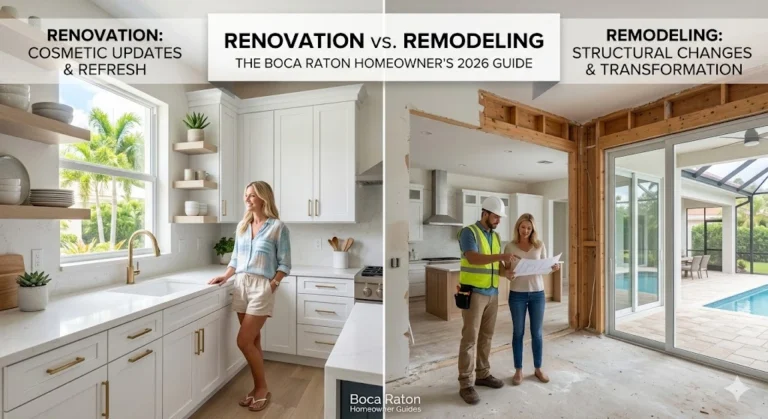
Older South Florida homes often reveal surprises: slab drain lines or cast-iron pipes that need replacement, rot around showers and windows, or wiring that won’t pass current code once it’s opened. A fair bid names these as possible and explains the process, so you can set aside a contingency instead of being caught off guard. If you’re deciding how deep to go, renovation vs. remodeling explains the scope trade-offs.
Florida contract checks before you sign
- Recovery fund notice. Residential contracts over $2,500 must include the Florida Homeowners’ Construction Recovery Fund statement (§489.1425).
- Lien warning. Direct residential contracts over $2,500 must carry the construction lien notice (§713.015). Ask for lien releases from subcontractors and suppliers before you pay.
- Deposit deadlines. If the initial payment exceeds 10% of the contract price, the contractor must apply for permits within 30 days and start work within 90 days after the permits issue (§489.126).
- License. Verify it, and check for complaints, at the Florida DBPR license portal.
This is general information, not legal advice. For a dispute, consult a Florida construction attorney.
Read the payment schedule
Payments should follow finished work, for example demolition, rough-in inspection, tile, fixtures and final completion, not calendar dates. Be cautious of heavy upfront payments that run ahead of the work. Tie the final payment to the punch list, final inspection and lien releases.
How to compare three bids side by side
- Write one scope sheet listing rooms, materials, fixtures and permits, and give it to every contractor.
- Put each bid into a table with three columns: included, allowance and excluded.
- Price the gaps. Add missing items to the lowest bid at market cost.
- Test each allowance against your real selections.
- Compare change-order terms, warranty and schedule.
- Judge the leveled totals, not the headline numbers.
Collecting bids for a kitchen, bathroom or whole-home project? Use the same sheet for every contractor.
Green flags and red flags at a glance
| Green flag | Red flag |
|---|---|
| Itemized by trade, with quantities | One lump-sum number |
| Allowances shown with unit prices | Allowances unexplained or not listed |
| Written exclusions list | No mention of exclusions |
| Signed change orders required | Verbal approvals accepted |
| Payments follow milestones | Large payment before work starts |
Remodeling bid checklist
- Line items with quantities and brand, model and finish
- Allowance amounts, units and what they include
- Written exclusions list
- Permit responsibility and fees
- Milestone payment schedule
- Written change-order process with markup and schedule impact
- Start date, duration and warranty terms
- Florida notices (§489.1425 and §713.015) in the contract
FAQ
What is an allowance in a remodeling bid? A budgeted dollar amount for items not yet selected. Spend less and you should get a credit. Spend more and you pay the difference.
What does “excluded” mean in a contractor bid? The work or item isn’t in the price. If it’s needed, it gets added later by change order.
Do small changes need a change order? Yes. Even a no-cost change can affect the schedule, so document it.
How big a deposit is normal in Florida? Section 489.126 doesn’t cap the deposit, but an initial payment above 10% triggers the permit and start-work deadlines. Milestone payments keep your exposure lower.
Is the lowest bid the best choice? Not until the bids are leveled. A low total often reflects low allowances or missing scope.
Get a bid that spells it out
Boca Raton Remodeling Services provides written, itemized estimates for kitchen, bathroom, condo and whole-home projects. Call (561) 896-9392 or email info@bocaratonremodelingfl.com to request yours.