Quick Answer for Homeowners
The most common mistakes to avoid during home renovation include skipping permits, hiring unlicensed contractors, underestimating costs, and rushing the planning phase. In Boca Raton, Florida, these errors carry extra risk because of strict hurricane-rated building codes, the Wind-Borne Debris Region requirements, and permit enforcement through the City’s Boca eHub portal. Plan carefully, budget with a 15–20% contingency, and always verify contractor licenses through theFlorida DBPR before any work begins.
Who This Guide Is For
This post is helpful if you are:
- A Boca Raton homeowner planning a kitchen, bathroom, or full home renovation
- A first-time renovator unsure about Florida permits and local codes
- A property owner who has started a project and hit unexpected problems
- Someone who recently bought an older home in areas like Boca West, Royal Palm Yacht Club, or Mizner Park
- A landlord or investor managing renovation costs in Palm Beach County
The Renovation Trap That Catches Even Smart Homeowners

You have the Pinterest board ready. You have saved for months. You have even picked out the tile. Then the walls open up, and suddenly you are staring at outdated wiring, a contractor who disappeared, and a budget that is already $18,000 past its limit.
This happens far more often than most people admit.
According to a February 2026 report published by Clever Offers and covered by Morningstar, 85% of American homeowners spent money on an unplanned repair in 2025. Nearly 1 in 5 had to stop a renovation project halfway through because unexpected costs wiped out their funds. Among those who had renovated in the past five years, 70% went over budget, and 58% carry at least one regret about how the project went.
Here in Boca Raton, those numbers hit even harder. Labor costs run higher than mainland markets. Hurricane-rated materials add a premium to every window and door. And the City of Boca Raton Building Department enforces some of the most detailed permit requirements in South Florida.
The good news? Most renovation disasters are completely avoidable. This guide walks you through the biggest mistakes to avoid during home renovation, with specific guidance for Boca Raton homeowners, verified 2026 data, and practical steps to protect your investment.
What Happens When You Skip the Planning Phase?
Rushing into a renovation without a clear plan is the fastest way to spend more and get less.
Good planning means writing a detailed scope of work before you contact a single contractor. It means deciding whether you need an architect, a designer, a general contractor, or all three. It means understanding what work your HOA requires approval for — and Boca Raton has many active HOAs, especially in communities like Boca West, Seasons, and St. Andrews Country Club.
A quarter of homeowners who renovated in 2025 did not set a formal budget before starting, according to the 2026 Houzz & Home Study, which surveyed more than 20,000 U.S. respondents between January and March 2026. Of those who did set a budget, 37% still went over it. The most common reason, cited by 52% of those who exceeded their budget, was unexpected product and service costs.
The fix is simple, even if it takes discipline. Write out every phase of the project before you begin. Sequence the work in the right order — structural and mechanical systems first, finishes last. If you are in Boca Raton and your home was built before 2000, factor in discovery time for hidden issues behind walls and under slabs.
Pro tip: Add one to two weeks of buffer to every timeline your contractor provides. Kitchen renovations estimated at eight weeks routinely stretch to ten or eleven in South Florida, especially during the rainy summer season when deliveries slow and jobsite access gets disrupted.
Are You Setting a Realistic Budget for a Boca Raton Renovation?
Underestimating renovation costs is the mistake that sends the most projects off the rails.
In Palm Beach County, a major home remodel in 2026 ranges from $11,616 to $96,807, based on current market data. For room additions, Boca Raton homeowners are paying between $180 and $425 per square foot in 2026, according to local remodeling firms tracking Palm Beach construction activity. Compare that to national averages from Angi of roughly $48,000 for a room addition, and you start to see why Boca Raton budgets often shock people who moved here from other states.
Three factors drive costs higher here than almost anywhere else in Florida:
- Hurricane-rated materials. Every window, door, and fastener in the Wind-Borne Debris Region carries a premium. Impact-resistant window replacement alone in Boca Raton ranges from $15,000 to $45,000 for a typical home, based on 2026 local contractor data.
- Skilled labor rates. Coastal tradespeople command higher wages because they also compete for work on luxury hospitality projects and waterfront estates. That demand ripples through every line item on your bid.
- Insurance compliance. Boca Raton insurance carriers require detailed compliance certificates, which add administrative layers and inspection costs that do not show up in national cost guides.
The industry standard recommendation for contingency funds is 10% for cosmetic projects and 15–25% for larger renovations or older homes. In Boca Raton, lean toward the higher end. If your slab is older than 20 years, budget for the possibility of a slab leak. If your roof was last replaced before 2010, expect the inspector to flag it.
Also watch for tariff impacts in 2026. The 2026 Clever Offers survey found that 60% of homeowners say tariffs have negatively affected their renovation plans. Steel, aluminum, and lumber costs have risen noticeably since early 2025. Lock in material prices and delivery windows early when possible, especially for cabinetry and appliances with long lead times.
Why Do Boca Raton Homeowners Skip Permits — and What Does It Cost Them?
Skipping permits feels like a shortcut. It never is.
The City of Boca Raton Building Department, located at 200 NW 2nd Avenue, requires permits for virtually all meaningful construction. This includes structural additions, kitchen and bathroom remodels involving plumbing or electrical changes, HVAC replacements, roof work, and window or door replacements. All new permit applications in 2026 are submitted through the City’s Boca eHub portal at bocaehub.com, and building permit fees are generally set at 1.6% of the total construction valuation, with minimums and tiered rates for larger projects.
Here is what no permit actually costs you:
- When you sell your home, a buyer’s inspector or title search will find unpermitted work. You may be required to tear it out entirely and start over at your own expense.
- Your homeowner’s insurance can deny claims if the work was done without permits and does not meet code.
- The Florida Building Code 8th Edition (2023) is the current standard, but the 9th Edition (2026) takes effect on December 31, 2026. Any Boca Raton project not under permit by year-end may need costly design revisions to meet updated wind-load and energy efficiency standards.
Work started without a permit in Boca Raton results in double fees and potential penalties, according to the City’s own permit guide. That penalty alone wipes out any money you thought you saved by skipping the process.
The permit system exists to protect you. Use it.
How Can You Spot an Unlicensed Contractor Before It Is Too Late?
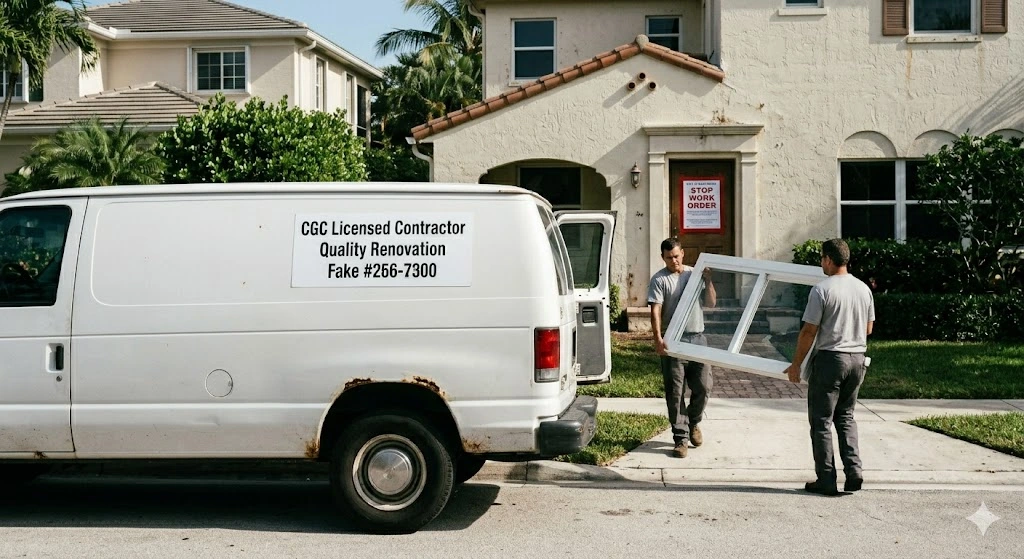
This is where Boca Raton homeowners — particularly those who recently moved from other states — get hurt the worst.
A Palm Beach County homeowner losing $200,000 to an unlicensed contractor is not a rare news story in South Florida. It happens regularly enough that WPTV has covered it, and local law firms specializing in construction disputes in Boca Raton handle these cases constantly.
In Florida, contracts with unlicensed contractors are unenforceable. That means if they disappear with your deposit or leave the job unfinished, you have almost no legal recourse. The Florida Department of Business and Professional Regulation (DBPR) has no authority to discipline an unlicensed person. Civil lawsuits against them are usually futile because they carry no insurance.
The legal consequences are also serious. Florida Statute 489.127 makes unlicensed contracting a first-degree misdemeanor on the first offense, carrying up to one year in jail and a $1,000 fine. A second offense escalates to a third-degree felony with up to five years in prison. During a declared state of emergency — and Florida sees multiple hurricane emergencies each season — even a first offense becomes a felony.
Effective July 1, 2025, Florida eliminated certain local specialty contractor license types, requiring them to align with state CILB standards. This means the licensing landscape changed recently. Always verify current license status through the Florida DBPR License Portal before hiring anyone.
Under Florida’s HB 1335, effective for claims filed after January 1, 2025, homeowners harmed by a licensed contractor can now seek up to $100,000 per claim (Division I) from the state’s Homeowners’ Construction Recovery Fund. That protection does not exist if you hire unlicensed.
The verification process takes about three minutes. Enter the contractor’s name or license number at the DBPR portal. Check active status, expiration date, and any disciplinary history. Do this before you sign anything.
What Are the Most Overlooked Mistakes During Home Renovation Planning?
Beyond budgets and permits, several renovation mistakes rarely make the top-ten lists — but they consistently show up in projects that go sideways.
Changing your mind mid-project. The 2026 Houzz & Home Study found that 31% of homeowners expanded the scope of their project during construction. Mid-renovation changes are expensive because contractors must stop work, reorder materials, and redo finished sections. Decide on your scope completely before demolition starts. Change orders after work has begun routinely cost 20–40% more than the same work would have cost in the original plan.
Hiring the cheapest bid. A low bid often means missing line items, substandard materials, or a contractor who is overcommitted and will disappear mid-project. Get at least three detailed bids for any renovation over $10,000. Look for bids that specify brand names, material grades, permit responsibility, cleanup terms, and payment schedules tied to milestones, not calendar dates.
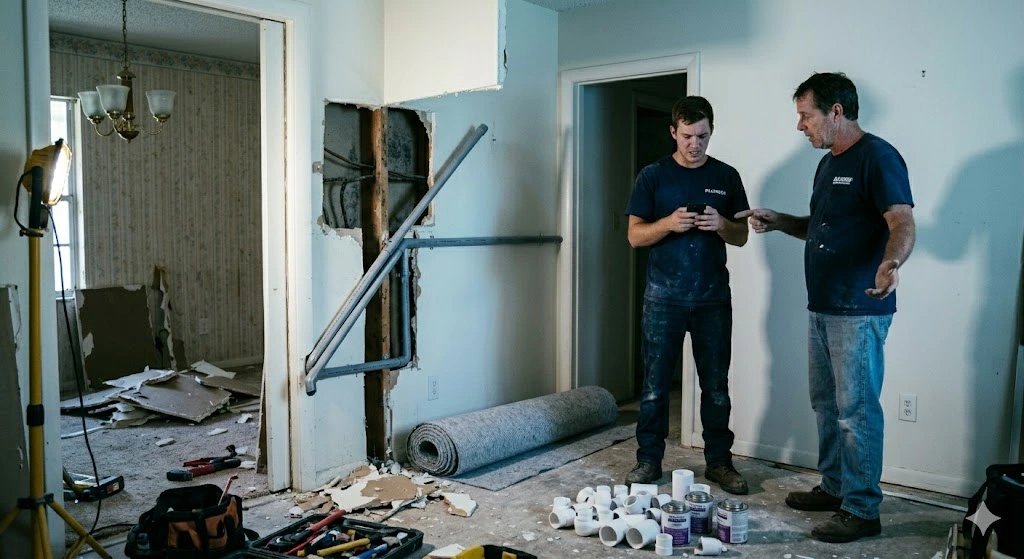
Ignoring the sequence of work. Renovation has a correct order: demolition, structural, rough plumbing and electrical, HVAC, insulation and drywall, finishes, fixtures, final inspection. Installing flooring before the plumber finishes is a common error that forces removal and reinstallation. In Boca Raton, the sequencing also has to account for inspection scheduling through the Boca eHub system, which typically books inspections one to two business days out.
Not planning for where you will live. A full kitchen renovation takes eight to twelve weeks in a normal market. If you are in Boca Raton during the summer rainy season, plan for longer. Eating out every meal for three months while paying contractor draws gets expensive fast. Build temporary living costs into your budget before day one.
Over-customizing for your own taste. Bold tile, unusual color combinations, and highly personalized layouts feel great while you live there. They narrow your buyer pool when you sell. In Boca Raton’s competitive luxury market, where buyers have strong aesthetic opinions, over-customization can reduce offers or extend market time. Balance personal preferences with timeless choices, especially in kitchens and master bathrooms.
Are DIY Renovations Actually Saving You Money in 2026?
Some DIY work makes sense. A lot of it does not.
Painting interior walls, replacing cabinet hardware, installing a pre-hung door in a non-structural opening, and refreshing landscaping are all reasonable weekend projects for a motivated homeowner. These tasks carry low risk and do not require permits in most cases.
DIY electrical work, plumbing relocation, HVAC installation, and any structural changes are different. Florida law is clear: these trades require licensed contractors in Boca Raton. Attempting them yourself or hiring someone without the proper trade license creates the same risks as unpermitted work — failed inspections, insurance denial, and potential penalties.
Beyond legality, there is a practical consideration. In 2026, labor costs in South Florida are high enough that many homeowners assume they can save significantly by doing work themselves. What they often miss is the cost of mistakes. A DIY tile installation on a shower floor that fails waterproofing can cause $15,000 to $30,000 in water damage within two years. The savings from doing it yourself — maybe $800 in labor — disappear quickly.
Know your skill level honestly. Ask a contractor what work you can reasonably do to reduce costs. Many are willing to let homeowners handle demolition, cleanup, or painting to lower the total bill. That is a smarter approach than attempting plumbing in a 20-year-old Boca Raton home where slab lines may have shifted.
What Do Most Homeowners Forget About Renovation Contracts?
A renovation contract is not a formality. It is your primary protection when something goes wrong.
A solid contract for a Boca Raton renovation should include:
- Full scope of work with specific materials, brands, and dimensions
- Start date and estimated completion date with realistic milestones
- Payment schedule tied to completed work phases, not calendar dates
- Who is responsible for pulling permits and scheduling inspections
- Change-order terms that require written approval before any additional cost
- Cleanup and debris removal responsibilities
- Warranty terms for both labor and materials
- Insurance certificates showing the contractor carries general liability and workers’ compensation
A vague contract that says “kitchen renovation complete” with a single price is not a contract. It is an invitation to disputes. Every assumption you leave unstated in writing becomes an argument point later.
Ask your contractor specifically: who pulls the permit? If they say “we usually skip that for small jobs,” walk away immediately. In Boca Raton, there is no such thing as a small job when it comes to permit requirements.
How Does Boca Raton’s Coastal Climate Affect Your Renovation Decisions?
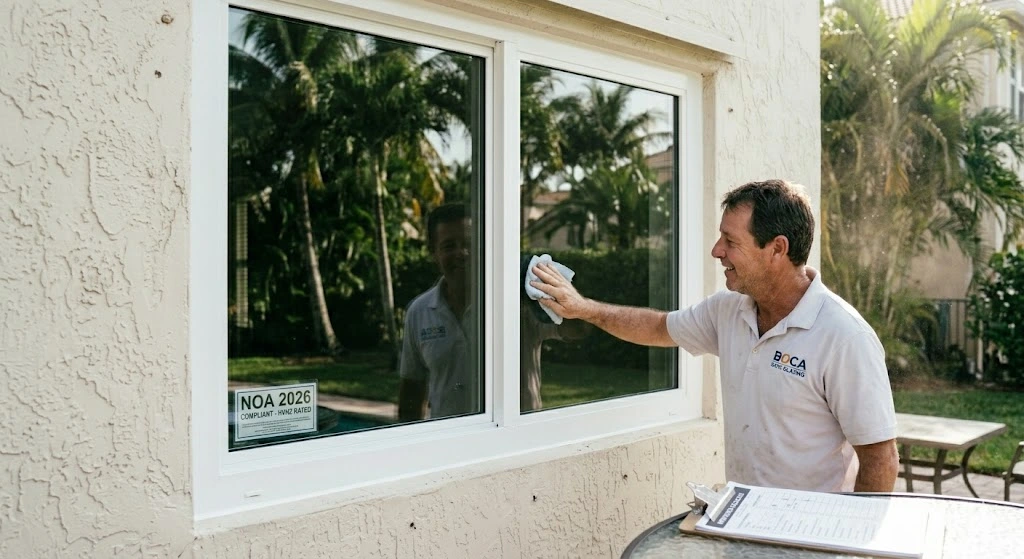
Living in South Florida means your renovation choices carry consequences that homeowners in other climates never think about.
Humidity and mold. Boca Raton’s average annual humidity runs between 70% and 80%. Materials that work fine in a dry climate — certain drywall compounds, wood species, and flooring adhesives — perform poorly here. Always specify materials rated for high-humidity coastal environments. Use moisture-resistant drywall in bathrooms and anywhere near exterior walls.
Wind and impact requirements. Boca Raton sits in a Wind-Borne Debris Region. This means any window or door replacement must meet Florida’s High Velocity Hurricane Zone standards or the equivalent wind-pressure ratings for Palm Beach County. You cannot install standard windows here and pass inspection. Impact-rated glazing is not optional.
Salt air corrosion. Homes within a mile of the ocean experience accelerated corrosion on metal fasteners, light fixtures, appliances, and HVAC components. Specify marine-grade or stainless steel hardware for any exterior or coastal-adjacent work. Budget for higher-quality HVAC components with corrosion-resistant coatings, especially if the air handler or compressor is on an exterior pad.
Flood zone considerations. Many Boca Raton neighborhoods near canals, the Intracoastal, or lower-lying areas fall within FEMA flood zones. Any structural renovation in these areas may require elevation certificates and flood-compliant materials. Check your property’s flood zone status at FEMA’s Flood Map Service Center before planning any addition or ground-level renovation.
What Renovation Mistakes Kill Your Return on Investment?
Not all renovations add equal value. Some actually reduce what your home will sell for.
According to the 2026 Cost vs. Value Report from Remodeling Magazine, a minor kitchen remodel nationally delivered a 112.9% return on investment — meaning you recovered more than you spent. Fiber cement siding replacement hit 114% ROI. These exterior and functional upgrades tend to outperform luxury interior projects.
By contrast, highly personalized renovations — converting a bedroom to a spa, adding a wine cellar, or installing overly custom cabinetry — often recover less than 50% of cost at resale. In Boca Raton’s luxury market, some of these features are expected in higher-priced homes. However, at the mid-range price point (roughly $600,000 to $1.2 million in 2026), over-investing in non-standard features reduces your buyer pool without increasing offers proportionally.
The renovations that deliver best in Boca Raton’s market tend to focus on:
- Impact windows and doors (insurance discounts, storm protection, high demand from buyers)
- Kitchen updates that improve function without extreme customization
- Bathroom modernization with neutral, timeless finishes
- Energy-efficient HVAC systems with smart controls
- Outdoor living improvements including covered lanais and summer kitchens
Consult a local Boca Raton real estate agent before committing to any renovation over $30,000. They can tell you what buyers in your specific neighborhood expect — and what they are not willing to pay for.
Frequently Asked Questions: Mistakes to Avoid During Home Renovation
1. What is the most common mistake homeowners make during home renovation?
The most common mistake is underestimating costs. A February 2026 survey by Clever Offers found that 70% of homeowners who renovated in the past five years went over budget. Always build a 15–20% contingency fund into your budget before you begin.
2. Do I need a permit for a bathroom remodel in Boca Raton, FL?
Yes, in most cases. If the remodel involves moving or modifying plumbing, electrical work, or structural changes, a permit is required. Purely cosmetic updates like replacing a vanity or painting walls without electrical changes do not require a permit. Submit applications through the Boca eHub portal at bocaehub.com.
3. How do I verify a contractor’s license in Florida before hiring?
Visit the Florida DBPR License Portal at myfloridalicense.com and search by the contractor’s name or license number. Check that the license is active, matches the type of work you need, and has no disciplinary actions on record. This takes about three minutes and can save you tens of thousands of dollars.
4. How much should I budget for a home renovation in Boca Raton in 2026?
Major remodels in Palm Beach County range from $11,616 to $96,807 based on current market data. Room additions run $180 to $425 per square foot. Always add a 15–20% contingency, and account for higher material and labor costs compared to national averages.
5. What happens if unpermitted work is found when I sell my home?
You may be required to obtain a retroactive permit, tear out the work entirely, or bring it up to current code at your own expense. Unpermitted work can also cause your buyer’s lender to decline financing or require escrow holdbacks. In Boca Raton, the Florida Building Code 9th Edition takes effect December 31, 2026, making any work permitted before that date subject to current standards.
6. Can I do my own renovation work as a homeowner in Florida?
Florida’s owner-builder exemption allows homeowners to perform work on their primary residence without a contractor license. However, you take on full liability and code compliance responsibilities, you cannot hire unlicensed workers to assist you, and the home cannot be for sale or rental purposes. For electrical, plumbing, HVAC, and structural work, hiring a licensed professional is strongly recommended.
7. How do I avoid renovation scams in Boca Raton?
Get at least three written bids, verify licenses through the DBPR, never pay more than 10–15% upfront as a deposit, insist on a detailed written contract, and never pay in full before work is complete. Be especially cautious after hurricane events, when unlicensed contractors target homeowners with storm damage.
8. What renovation projects deliver the best ROI in Boca Raton, Florida?
Impact window and door replacements, kitchen updates using mid-grade finishes, bathroom modernization, energy-efficient HVAC upgrades, and outdoor living improvements (covered lanais, summer kitchens) tend to deliver the strongest returns in the Boca Raton market. These align with what buyers specifically seek in South Florida’s climate.
9. How do tariffs affect my renovation budget in 2026?
Tariffs on steel, aluminum, and lumber raised material costs noticeably in 2025 and are expected to continue impacting prices through 2026. The 2026 Clever Offers survey found 60% of homeowners say tariffs have negatively affected their renovation plans. Lock in material prices and delivery dates early, especially for cabinetry, appliances, and windows.
10. What is the Florida Building Code version I need to follow for a 2026 renovation?
The Florida Building Code 8th Edition (2023) currently governs projects in Boca Raton in early 2026. The 9th Edition (2026) takes effect on December 31, 2026. If your project is not under permit before that date, it may require redesign to meet updated wind-load and energy efficiency standards. Consult the Florida Building Commission for the most current information.
11. What should a renovation contract include to protect me in Florida?
Your contract should include the full scope of work with specific materials and brands, start and completion dates, payment milestones tied to completed phases, permit responsibility, change-order process, cleanup terms, warranty language, and proof of contractor insurance. Anything left vague in writing becomes a dispute later.
12. How does Boca Raton’s Wind-Borne Debris Region affect my renovation?
It means all windows and exterior doors must meet specific wind-pressure ratings per the Florida Building Code. Standard windows sold nationally cannot be installed in Boca Raton and pass inspection. Impact-rated glazing is required. This adds cost, but it also reduces homeowner’s insurance premiums. Under Florida Statute 627.0629, insurers must provide discounts for effective windstorm protection, which can result in a 15–25% reduction in annual premiums.
Conclusion: Plan More, Pay Less, and Build It Right the First Time
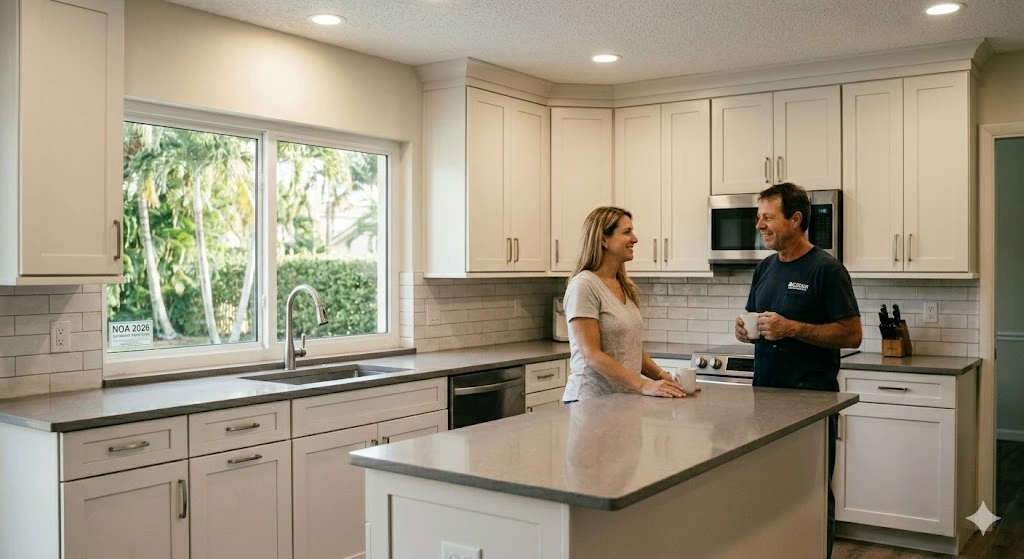
The homeowners who finish renovations on budget and without regret are not lucky. They are prepared.
They wrote out the full scope before demolition began. They verified every contractor’s license on the DBPR portal. They built a real contingency fund, knowing that Boca Raton’s coastal environment and complex permitting process rarely go exactly as planned. They asked for written contracts with specific materials, milestone payments, and permit responsibility spelled out clearly.
The statistics from 2026 are clear. Most renovation pain is predictable and preventable. Skipping a permit might save a few hundred dollars today. Dealing with the consequences costs ten to fifty times more when you try to sell or file an insurance claim.
Boca Raton is one of the most active renovation markets in South Florida. The city’s building department is accessible, the permit system is digital, and there are licensed contractors throughout Palm Beach County who do excellent work. Use them properly, plan carefully, and your renovation becomes an investment — not a cautionary story.
What has been your biggest renovation challenge in South Florida? Share your experience in the comments — your story might help another homeowner avoid the same mistake.
2026 Material Watch: What Boca Raton Homeowners Should Know
As the renovation market evolves, several emerging materials and systems are worth understanding before your next project:
- Impact-Rated Low-E Glass with Electrochromic Tinting: Next-generation glazing that shifts tint automatically based on sunlight. Particularly relevant in Boca Raton where east- and south-facing rooms deal with intense afternoon heat and UV exposure. Several glazing suppliers in Palm Beach County now offer this as a premium option.
- AI-Integrated HVAC Zoning Systems: Smart climate control that learns your occupancy patterns and adjusts room-by-room. In Boca Raton’s multi-zone homes, these can reduce FPL cooling costs by 20–30% over conventional systems.
- Moisture-Resistant Structural Insulated Panels (SIPs): An alternative framing approach gaining traction in coastal Florida construction for its resistance to humidity infiltration and superior air sealing performance compared to standard stud framing.
- Fiber-Reinforced Concrete Decking: A durable, low-maintenance alternative to traditional pool deck and patio concrete, engineered specifically for high-humidity coastal environments where standard concrete cracks and spalls more quickly.
- Solar-Ready Roof Systems: With Florida’s strong solar incentives and FPL net metering policies, installing a roof in 2026 without wiring conduit for future solar panels is a missed opportunity that adds cost later.
Data sources: Clever Offers / Morningstar Home Renovation Report (February 2026), Houzz & Home Study 2026, Remodeling Magazine Cost vs. Value 2025, Harvard Joint Center for Housing Studies, City of Boca Raton Building Department (myboca.us), Florida DBPR (myfloridalicense.com), Florida Building Commission (floridabuilding.org), FEMA Flood Map Service Center (msc.fema.gov).